A superplasticizer is worth specifying only when it solves a defined mix or placement problem without creating new risks in setting, air content, segregation, strength, or finishability. By the end, you will be able to screen suppliers, structure a job-specific trial, and choose support based on measured performance rather than brand name, package size, or a generic dosage range.
Key takeaways
- Use a superplasticizer to reduce water or extend flow without adding mixing water.
- Compare suppliers using test data, technical documents, and batch traceability.
- Trial the admixture with your actual cement, supplementary materials, aggregates, and water.
- Choose dosing and site support around your placing, pumping, and workability risks.
Decide Whether the Mix Needs a Superplasticizer
A superplasticizer admixture is appropriate when you need a lower water-cementitious-material ratio or longer workable flow without adding water. In high-performance concrete, that can increase strength, improve durability, or permit lower cementitious content.
It does not automatically reduce carbon emissions: calculate that claim from the complete approved mixture, including cementitious materials, transport, dosage, rejected loads, and curing.
Before adding admixture, test whether the problem has another cause:
- Change aggregate grading when excess voids, gap grading, or high sand content is driving paste demand and slump loss.
- Change cement content or the cementitious blend when strength, heat development, or durability requirements are not balanced by the proposed mixture.
- Change the placing method when congestion, pump-line restrictions, lift thickness, or vibration access—not rheology—is causing poor consolidation.
- Use a superplasticizer when the materials and placement method are suitable but the required flow, water reduction, or retention cannot be achieved together.
Base the decision on a trial using the actual cement, SCM proportions, aggregates, water, fibres, mixer, temperature, and delivery time. Silica fume, slag, and fly ash can increase dosage demand and alter viscosity, setting, and finishing. For reinforced or prestressed concrete, include admixture chlorides in the total chloride calculation.
Specify the required performance class, not just “superplasticizer”: ASTM C494/C494M Type F provides high-range water reduction, while Type G also retards setting. In hot weather, require measured slump retention and setting results at the expected concrete temperature.
Compare Suppliers by Evidence, Not Product Labels
Choose the supplier whose paperwork connects the admixture to your specification, not the one with the strongest “superplasticizer” label. Request test results, batch traceability, and a defined acceptance process before comparing price.
| Evidence | What it must show | What it proves |
|---|---|---|
| ASTM C494/C494M Type F | At least 12% water reduction in the specified comparison test | High-range water reduction without the Type G retardation requirement |
| ASTM C494/C494M Type G | At least 12% water reduction plus set-retardation performance | High-range water reduction where longer setting time is specified |
| Technical data sheet | Recommended dosage, water reduction, setting effects, slump-retention data, storage range, shelf life, and dosing limits | Whether the product fits the mix and placement requirements |
| Safety data sheet | Hazards, PPE, spill response, incompatibilities, and handling controls | Whether your storage and handling arrangements are suitable |
| Quality records | Certificate of conformity, certificate-of-analysis data, manufacturing date, batch number, retained sample, and delivery record | Whether each delivery is traceable and can be investigated |
A dosage or slump claim alone does not demonstrate ASTM performance. Ask for data from mixtures containing your planned silica fume, fly ash, slag, or other SCM proportions; neat-cement results can miss increased demand, viscosity, or poor slump retention.
For reinforced or prestressed concrete, obtain the admixture’s chloride contribution and include it in the total chloride calculation.
Require a trial-approval procedure, out-of-specification resolution, product-specific storage temperature, agitation and freeze-recovery instructions, compatible tank materials, and calibrated dosing guidance. ASTM results support selection; they do not replace job-specific acceptance trials.
Test Compatibility with the Actual Concrete Materials
A supplier’s data from neat cement does not prove cement-admixture compatibility. Polycarboxylate-ether performance can change when cement sulfate availability, alkali content, or clinker chemistry changes, causing rapid slump loss, excessive retardation, or weak early strength. Require a trial using the materials, mixer, concrete temperature, and target delivery time for your project.
| Check | Use in the compatibility trial | Failure to investigate |
|---|---|---|
| Cement | The exact source and planned cement content | Slump loss or delayed setting |
| Supplementary cementitious materials | Project proportions of silica fume, fly ash and slag, plus limestone filler | Higher dosage demand or excessive viscosity |
| Aggregates | Actual grading, moisture, shape, and absorption | Unstable slump and poor pumpability |
| Water | The production water, including dissolved salts | Unexpected setting or reduced water reduction |
| Fibres | The specified type, length, and dosage | Fibre clumping or loss of workability |
| Other admixtures | The actual products and addition sequence | Separation, foaming, or interference |
| Performance | Target slump retention, setting time, air content, pumpability, and strength development | A product that passes only an immediate-slump test |
| Chloride | The admixture’s declared chloride contribution | Exceeding the total chloride limit for reinforced or prestressed concrete |
Ask the supplier to explain every failure and repeat the trial after changing dosage or addition timing. The supplier should also calculate total chloride from water, cementitious materials, aggregates, and admixtures, not from the superplasticizer alone.
Require a Measured Trial-Mix and Correct Dosing Procedure
A site trial must prove that the concrete reaches its specified slump, retains workability, controls air, and develops the required cube strength with the actual materials and delivery time. Ask for a written trial mix programme, not a single dosage recommendation.
1. Record initial slump, concrete temperature, batch water, admixture dosage, mixing time, and slump retention at the planned discharge intervals. Repeat the checks at the maximum haul and placement time.
2. Measure fresh air content with ASTM C231 for normal-weight concrete or ASTM C173 when the concrete contains lightweight aggregate. If freeze-thaw durability depends on the air system, test hardened-air spacing and specific surface as well; fresh air alone cannot confirm bubble protection.
3. Cast cubes from each dosage level and test cube strength at the project ages, such as 7 and 28 days. Record bleeding, segregation, finishability, setting behaviour, density, and pumpability alongside strength.
4. Require batching instructions that state the admixture dosage in litres or kilograms per 100 kilograms of cementitious material, the permitted dosage range, and the exact addition sequence. The instructions must identify whether to add it with batch water or after initial mixing, plus the minimum mixing time.
5. Obtain the product-specific storage temperature, shelf life, agitation requirement, compatible tank and pipe materials, freeze-recovery procedure, and calibrated dispenser checks. Require a correction procedure for overdosing, underdosing, blocked lines, and admixture added to a rejected batch before routine production.
Choose the Supplier That Supports Your Actual Placement Risk
Choose the supplier that can reproduce your placement conditions, not merely provide a low unit price. For pumped concrete, demand evidence of pumpability and slump retention at the planned line length. For self-compacting concrete, require data on passing ability, segregation resistance, viscosity and finishing—not slump flow alone.
| Risk | Better supplier | Evidence to require |
|---|---|---|
| Pumped concrete | Supplier experienced with stable rheology | Trial through the planned pump line, with pressure, slump loss and blockage observations |
| Self-compacting concrete | Supplier able to control flow without segregation | Slump-flow retention, T500, sieve segregation or J-ring results using your aggregate grading |
| Precast concrete | Supplier focused on repeatable early strength | Demoulding strength, setting time and 1-, 3- and 7-day results under your curing cycle |
| Hot-weather concrete | Supplier that tests the actual concrete temperature | Slump retention and setting time at the expected temperature and delivery duration |
| Long haul times | Supplier with a retention mechanism suited to your cement | Measurements at dispatch, arrival and placement; do not accept “retarding” as proof |
| High early strength | Supplier that balances water reduction with strength development | Early-age strength data, heat or steam-curing compatibility and no excessive retardation |
Require trials with your cement, SCM proportions, aggregates, water, mixer and delivery time. Polycarboxylate-ether performance can change with sulfate balance and cement chemistry; silica fume, fly ash and slag can increase dosage demand and viscosity.
Dolfin Projects can add value when its application guidance helps diagnose those material-specific changes rather than simply recommending a higher dose.
For reinforced or prestressed work, obtain the admixture’s chloride contribution and complete the total chloride calculation. Also request ASTM C494/C494M Type F or Type G performance data, including the required minimum 12% water reduction.
Related products
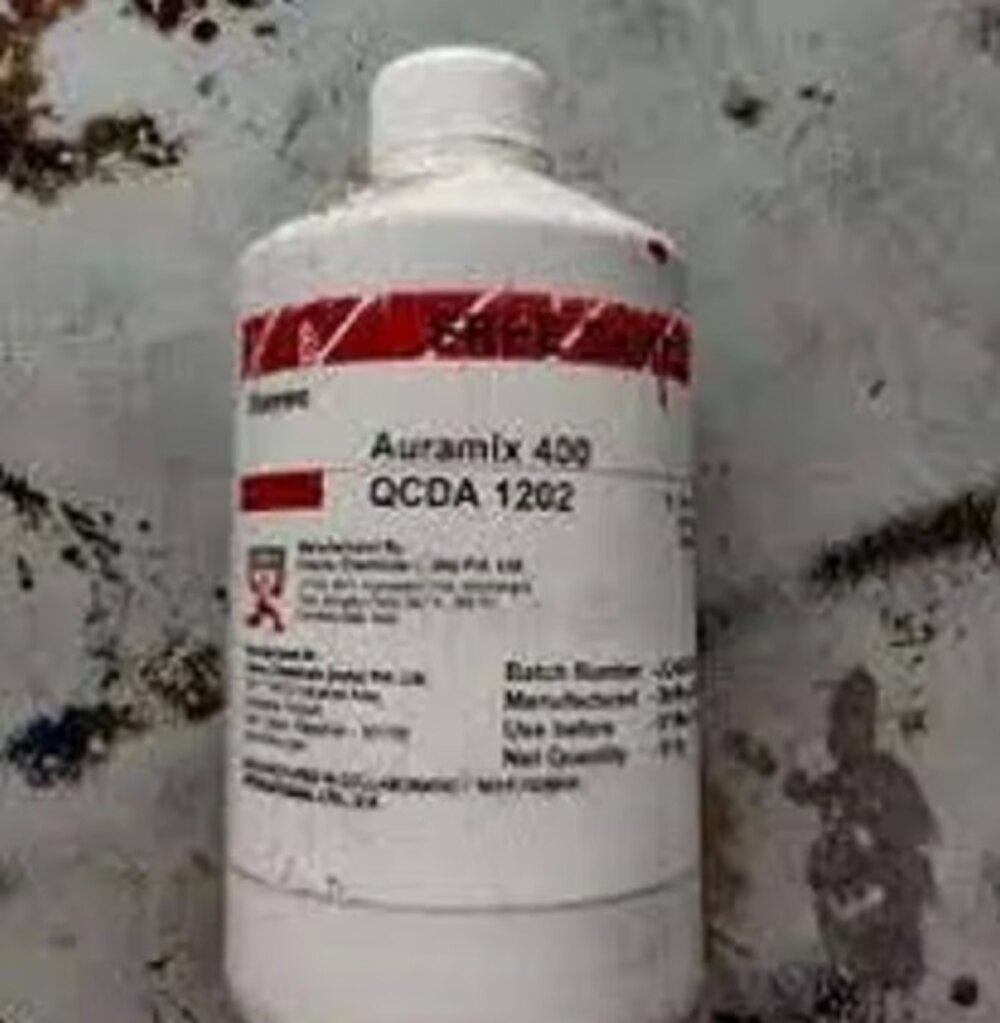
 | Waterproofing Chemical Fosroc Auramix 400 Superplasticizer Admixture, For Construction Suppliier Concrete Strength Grade M25 Brand Fosroc Color Dark Brown Grade Standard Industrial Grade Dosage 0.3% to 1.5% by weight of cement Packaging... View product → |
 | Concrete Admixture Fosroc Conplast SP430 G8 Concrete Admixture Supplier Packaging Type Drum Usage/Application Construction Brand Fosroc Packaging Size 250 Litre Shelf Life 12 Months Ph Value 8.5 Form Liquid... View product → |
Frequently asked questions
When does a concrete mix need a superplasticizer?
Choose one when you need a lower water-cementitious-material ratio or longer workable flow without adding water. It can support higher strength, improved durability, or lower cementitious content.
What evidence should you request from a superplasticizer supplier?
Request product technical data, dosage guidance, storage conditions, batch details, and test results that identify the concrete materials and conditions used.
How do you test superplasticizer compatibility?
Run a trial with the actual cement, supplementary cementitious materials, aggregates, mixing water, and target dosage. Check slump or slump flow, retention, setting time, air content, strength, and segregation.
Why is a measured trial mix and dosing procedure important?
A measured trial confirms the required dosage and exposes changes in workability, setting, air content, and strength. Define when to add the admixture, how to measure it, and how to adjust within the approved range.
How should you choose a supplier for placement risk?
Choose the supplier that can support your actual risks, such as pumpability, long haul time, hot weather, congested reinforcement, rapid placement, or demanding finish requirements.
Related product
 | Concrete Admixture Supplier Concrete Strength Grade M30 Usage/Application Construction Packaging Size 250 Color Brown Type Of Admixture Pc Based Admixture Shelf Life 1... View product → |