Water enters concrete through capillary pores, cracks, joints, penetrations and poorly compacted zones, then drives corrosion, staining, debonding and deterioration. By the end, you will be able to match the protection method to the structure, verify site conditions and see where a technically capable supplier reduces waterproofing risk.
Key takeaways
- Match integral admixtures, coatings and curing compounds to the moisture risk.
- Prepare concrete by cleaning, repairing cracks and removing laitance before coating.
- Treat joints and cracks with systems designed for movement and water pressure.
- Check compatibility, dosage, coverage and application conditions before ordering materials.
How moisture turns sound concrete into a durability problem
Water does not need to appear as a visible leak to damage concrete. Capillary absorption draws moisture into pores; hydrostatic pressure then drives it through cracks, joints and honeycombing at about 9.8 kPa per metre of water head.
Chloride transport through wet concrete can depassivate steel and start reinforcement corrosion, while freeze-thaw cycling expands trapped water and causes cracking where freezing occurs.
Do not choose a waterproofing system until you diagnose:
- The moisture source: rain, plumbing, groundwater, condensation or vapor drive.
- The pressure direction: positive-side exposure, negative-side exposure, or fluctuating water-table conditions.
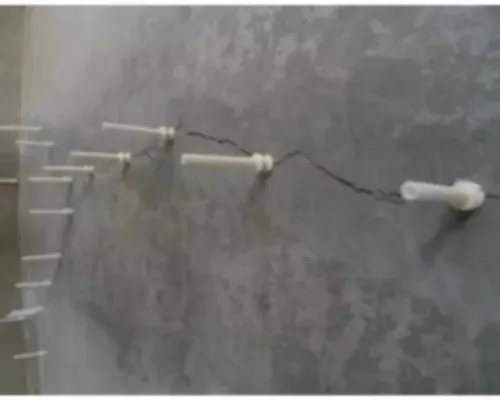
- The entry path: active leaks, construction joints, movement joints, tie holes, penetrations, uncontrolled cracks, laitance or honeycombing.
- The substrate condition: soundness, surface moisture, soluble salts and bond strength.
- The concrete evidence: use ASTM C1202 results as an electrical-conductance indicator, not proof of water impermeability; pore chemistry, curing, specimen conditioning and test age affect the coulomb value.
| Finding | Likely consequence | What it changes |
|---|---|---|
| Soluble salts or vapor movement | Efflorescence, osmotic blistering or delamination | An impermeable topcoat may trap moisture and worsen debonding |
| Active leak or hydrostatic pressure | Water bypasses or detaches the barrier | Repair, drainage and pressure control come before coating |
| Poor curing or uncontrolled cracking | Shrinkage, dusting and new water paths | Integral admixture or surface coating cannot replace curing and crack control |
| Chloride-laden moisture | Reinforcement corrosion and concrete spalling | Select protection for exposure, cover and chloride ingress, not the product label alone |
Choosing between integral protection, coatings and curing compounds
Fresh concrete usually favors an integral waterproofing admixture; cured concrete requires a surface system. Choose between them according to exposure, movement and substrate condition, not the product label alone.
| Option | Best fit | Main limitation or exposure check |
|---|---|---|
| Integral waterproofing admixture | New slabs, tanks, basements and cast-in-place walls where concrete quality and joint detailing are controlled | It cannot seal movement joints, cracks, penetrations or honeycombing; verify compatibility with the mix and curing regime |
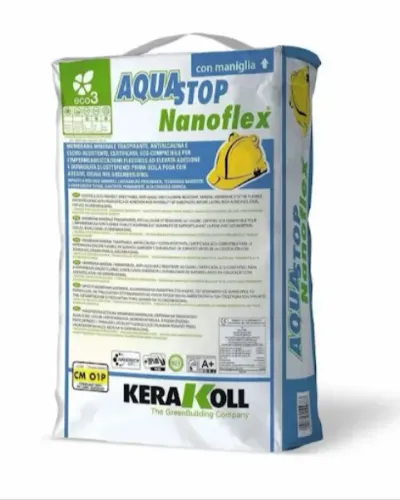
| Cementitious coating | Sound cured concrete, masonry and damp-side applications requiring pore sealing or protection from liquid water | Rigid films do not accommodate recurring structural movement; repair leaks, cracks and weak surfaces first |
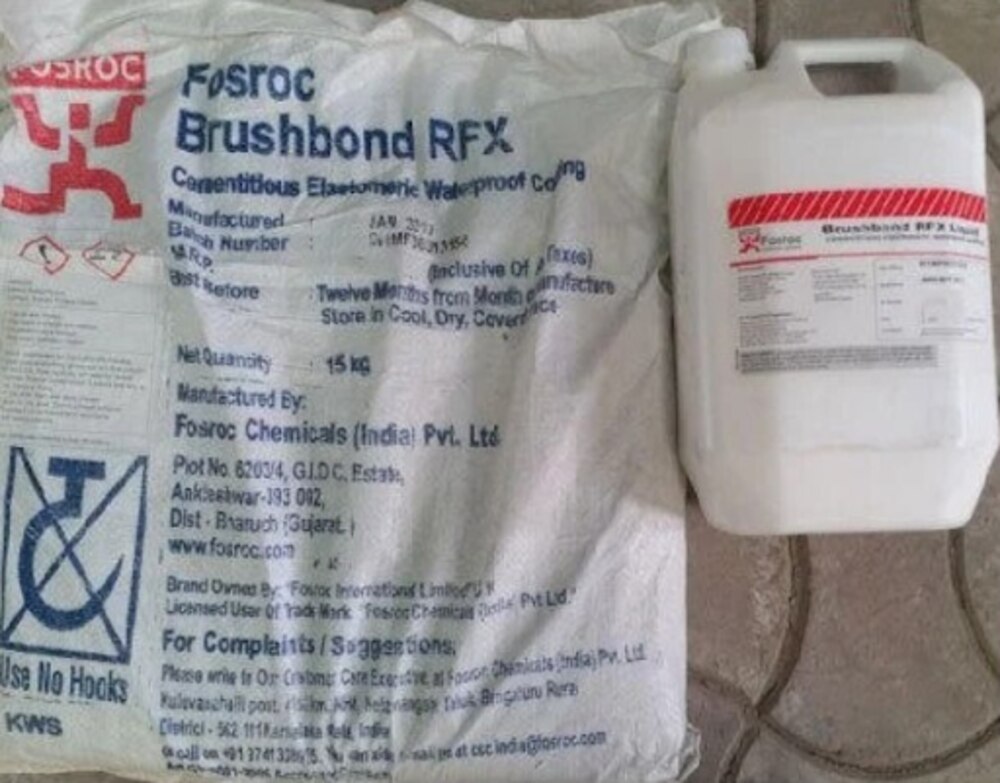
| Elastomeric coating | Cured concrete exposed to weather, temperature changes or limited crack movement | Confirm crack-bridging width, movement frequency, adhesion and resistance to the actual chemicals and temperature |
| Curing compound | Fresh concrete after finishing, to reduce early moisture loss and support hydration | It is not waterproofing and cannot replace joint sealing, crack repair or protection against hydrostatic pressure |
A well-proportioned, consolidated concrete with a low water-cementitious-materials ratio often outperforms a chemical added to porous concrete. Entrapped air, laitance, bleed-water finishing and premature drying create pathways that coatings cannot reliably correct.
For acidic process water, hydrocarbons, deicing salts or aggressive cleaning chemicals, demand immersion-resistance data at the service temperature. Select the system only after checking active leaks, joints, cracks and penetrations; otherwise water can bypass the treatment or force it off the surface.
What happens from batching or surface preparation to final protection
Concrete batching determines whether integral waterproofing performs: dose the admixture into the approved mix design, follow the stated mixing sequence, and never compensate for poor workability by adding unapproved water. Place, compact and cure the concrete properly; the admixture does not seal cracks, joints, penetrations or active leaks.
For surface-applied systems, complete repairs and substrate preparation before opening the waterproofing container. Remove laitance, dust, oil and loose concrete; fill honeycombing and tie holes, and confirm the required moisture condition and surface profile.
- Liquid-applied membrane: mix each batch as specified, apply at the stated coverage rate in multiple coats, and record wet-film thickness at representative locations. Respect recoat timing; a heavy pass can skin over, trap solvent or blister, while excessive thickness delays curing. Protect the membrane from rain, dust, standing water and traffic until cured.
- Cementitious coating: pre-dampen concrete to the specified saturated-surface-dry condition, mix only with the stated water quantity, and apply the required coats within the product’s pot life and recoat window. Shield it from rapid drying, hot wind, low humidity, frost and rain during curing.
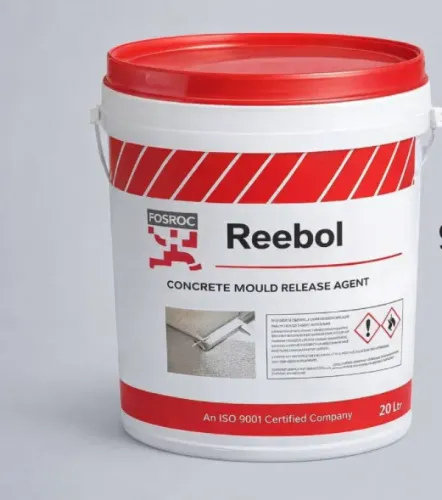
- Curing compound: spray it uniformly after finishing and when surface water has disappeared, at the specified coverage. It limits early moisture loss and supports hydration; it does not waterproof joints, cracks or leaks.
Record batch numbers, coverage, wet-film readings and detail treatment. Check cured-film continuity and investigate defects before backfilling or allowing traffic.
How joints, cracks and material compatibility determine success
Do not accept waterproofing until active leaks, honeycombing, tie holes, laitance, failed construction joints and uncontrolled cracks have been repaired. A membrane cannot bridge a void or stop water travelling behind a debonded coating.
Check these conditions before application:
- Complete crack repair according to movement: inject leaking cracks, seal static cracks, and use a flexible detail for recurring movement.
- Treat construction joints separately with a keyed detail, sealant, bandage system or injectable hose; do not rely on coating alone.
- Detail movement joints for the expected width and frequency of movement, including compatible sealant and properly continuous waterstops.
- Fill tie holes and honeycombing with a compatible repair mortar, then remove dust, weak concrete and laitance.
| Issue | What to verify | What goes wrong if missed |
|---|---|---|
| Construction joints | Joint geometry, surface preparation, waterstop continuity and sealant adhesion | Water bypasses the membrane at the discontinuity |
| Movement joints | Design movement, joint width, sealant movement rating and flexible detailing | A rigid coating cracks when the joint opens |
| Cracks | Width, activity, leak pressure and repair material | Recurring cracks reopen beneath the waterproofing |
Compatibility checks must cover the repair mortar, primer, membrane, sealant and waterstop. Confirm substrate moisture limits, mixing water, curing method, recoat window and minimum application temperature in the product data sheets. PVC waterstops also require the correct ribbed, dumbbell, centerbulb or split-rib profile, sound field welds and continuity at intersections; appearance alone proves nothing.
A bond test and mock-up can expose incompatibility before full installation.
How a supplier turns a product purchase into a workable waterproofing system
A supplier earns trust when it supplies a system you can install and inspect, not merely a container. Ask for a project-specific method statement linking substrate preparation, compatible repair mortar or injection material, mixing, application, curing, and acceptance checks.
It must state substrate saturation, water addition, pot life, recoat window, minimum application temperature, and protection from rain, wind, and traffic.
- Request the technical data sheet, safety data sheet, batch traceability records, shelf-life limits, and storage conditions for every supplied lot.
- Require repair and joint-detail drawings showing how to treat honeycombing, tie holes, cracks, construction joints, and active leaks before coating.
- Ask for pull-off adhesion evidence using ASTM C1583, with the test substrate, cure age, failure location, and achieved strength recorded.
- Treat ASTM C1202 as an electrical conductance indicator, not proof of waterproofing. Require water-permeability or immersion data that matches the exposure.
- For chemical service, obtain resistance results for the actual acid, hydrocarbon, salt, or cleaning chemical at its operating temperature.
- Require field forms for coverage, wet-film thickness, cured-film continuity, detail treatment, and lot numbers.
For a Gujarat project, apply the same standard to Dolfin Projects: ask it to identify compatible products and provide this evidence before purchase, not after a failed coating reveals a preparation or exposure mistake.
Related products
 | Concrete Admixture Fosroc Hydroproof Xtra Chemical Supplier Form of Chemical Liquid Brand Fosroc Usage/Application Construction Packaging Size 20kg Category Waterproofing Coating Color White Crystal... View product → |
 | Waterproofing Chemical Concrete Waterproofing Admixture Supplier Usage/Application Construction Brand Fosroc Packaging Size 200L Grade Standard Chemical Grade Packaging Type Barrel Shelf Life 2 Year... View product → |
Frequently asked questions
How does moisture damage otherwise sound concrete?
Capillary absorption draws water into concrete pores, while hydrostatic pressure pushes moisture through cracks, joints and honeycombing.
How do you choose between integral protection, coatings and curing compounds?
Use integral protection during batching, coatings on prepared hardened surfaces, and curing compounds to limit early moisture loss after placement.
What preparation is needed before applying a waterproofing coating?
Remove dirt, oil, laitance and loose concrete, repair defects, control surface moisture, and follow the product’s specified coverage and application conditions.
Why do joints, cracks and compatibility affect waterproofing performance?
Joints and cracks need treatments that accommodate movement and water pressure, while incompatible materials can prevent bonding or reduce system performance.
Related products
 | Waterproofing Chemical Integral Waterproofing Compound Supplier Brand Chryso Usage/Application Waterproofing Packaging Size 20L Color Gray Physical State Liquid Country of Origin Made in India Minimum... View product → |
 | Fosroc Waterproofing Chemical Waterproof Elastomeric Coatings Supplier Type Elastomeric waterproofing coating Packaging Size 12L Usage/Application Waterproofing Brand Chryso Packaging Type Bucket Color White... View product → |
 | Chryso Waterproofing Products Water Based Concrete Curing Compound Supplier Usage/Application Industrial Brand Chryso Packaging Size 20L Physical State Liquid Packaging Type Bucket Country of Origin Made in India... View product → |
 | Waterproofing Chemical Supplier Grade Standard Industrial Grade Brand Fosroc Usage/Application Waterproofing Packaging Size 20kg Category Waterproofing Coating Purity % 98%... View product → |