The lowest quoted price or highest stated water reduction does not tell you whether an admixture will work with your cement, supplementary cementitious materials, aggregates, temperature, haul time, and placing method. Use the project requirements, documented trial results, delivery controls, and supplier support to compare products before committing to a source.
Key takeaways
- Define slump, strength, setting time, mix materials, and site conditions first.
- Run a project-specific trial mix before approving an admixture.
- Verify compatibility, durability evidence, batch traceability, and storage requirements.
- Compare technical support, delivery terms, replacement policy, and accountability.
Start with the concrete problem, not the product label
Before contacting a concrete admixture supplier, record the actual performance target: slump at discharge, water-cementitious-materials ratio, required strength, cement type, fly ash, slag or silica fume content, aggregate grading, ambient and concrete temperature, mixing sequence, pumping distance, haul time, placing method, and required setting window.
This information makes superplasticizer selection a mix decision, not a catalogue choice.
| Category | Select it when the concrete problem is |
|---|---|
| Water-reducing admixture | Lower water at a workable slump |
| High-range water reducer or superplasticizer | Reach a low water-cementitious-materials ratio or retain high flow |
| Waterproofing admixture | Address a defined permeability or absorption mechanism |
| Corrosion inhibitor | Reduce reinforcement-corrosion risk in a specified exposure |
| Pumping aid | Improve cohesion, lubrication, or pumpability |
| Retarder | Extend setting through hot weather or long haul time |
| Accelerator | Develop earlier set or strength in cold weather or rapid construction |
| Air-entraining admixture | Provide freeze-thaw air voids where exposure requires them |
| Shrinkage-reducing admixture | Reduce drying-shrinkage strain within a crack-control strategy |
A superplasticizer is the wrong remedy for poor aggregate grading, excess mixing water, inadequate curing, incompatible cement, or a pump-system fault. A waterproofing admixture does not automatically control cracks, joints, hydrostatic pressure, or chloride transport.
Ask the supplier to state the mechanism addressed and the supporting test method. Require project-specific trials with the actual materials and time window; ASTM C494/C494M classification identifies performance, not a universal dosage.
Compare performance through a project-specific trial mix
Compare two admixtures by the concrete they produce, not by dosage or headline water-reduction percentage. Hold the water-cementitious-materials ratio, target slump, cementitious-material combination, aggregate grading, concrete temperature, mixing time, and discharge interval constant; vary each product’s dosage until it meets the same performance target.
| Measure | Keep constant or compare | Why it matters |
|---|---|---|
| Water-cementitious-materials ratio | Same ratio for both products | Separates admixture performance from added water |
| Target slump | Same slump at mixing and discharge | Exposes slump retention, not just initial workability |
| Materials and process | Same cement, fly ash, slag, silica fume, water, aggregates, other admixtures, mixing time, and discharge interval | Reveals cement compatibility and field behaviour |
| Dosage | Record the dose that achieves the target; do not copy catalogue dosage | A higher or lower dose may suit the actual mix |
| Temperature and timing | Same concrete temperature and agreed test window | Shows setting and slump-retention effects |
Run a laboratory or site trial mix with the actual materials. Record dosage, slump at mixing and discharge, air content, concrete temperature, setting time, density, strength development, pumpability, finishing behaviour, and slump retention.
Ask for active chemistry, solids content, chloride content, density, pH, recommended dosage, setting impact, performance limits, and cement compatibility testing. Treat ASTM C494/C494M Type A, D, or G classifications as performance references, not universal dosage instructions.
Check air at placement using ASTM C231 or ASTM C173/C173M. For freeze-thaw concrete, request hardened air-void spacing and specific-surface data under ASTM C457/C457M; fresh-air percentage alone cannot prove protection.
Prove compatibility, durability claims, and field controls
Require evidence from a project-specific trial, not a compatibility statement copied from a technical data sheet. The trial must use the actual sequence and concentration at which each product enters the mixer.
Never prove admixture compatibility by combining concentrated products in a cup: polycarboxylate water reducers, air entrainers, accelerators, and viscosity-modifying admixtures can precipitate or form gel on contact. Use separate calibrated dispensers, or a validated dilution and sequencing procedure.
| Evidence | Require in the trial | Failure it exposes |
|---|---|---|
| Multi-admixture compatibility | Actual materials, dosage, order, concentration, mixing time, and temperature | Precipitation, gel, air loss, segregation, or abnormal setting |
| Retarder performance | Concrete temperature, haul time, discharge window, finishing sequence, and retempering restrictions | Excessive delay or lost workability |
| Accelerator performance | Concrete temperature, protection, maturity or strength development, and freezing risk | Early freezing or inadequate early strength; non-chloride status does not remove cold-weather controls |
| Shrinkage reduction | ASTM C157/C157M conditions and results, alongside curing, joint layout, crack-control reinforcement, and moisture control | Treating an admixture as a substitute for crack control |
| Waterproofing | Identify whether evidence covers capillary absorption, hydrostatic permeability, cracking, or chloride transport | Applying one claim to every leakage mechanism |
Ask the supplier to explain the exposure and test method behind each durability claim. ASTM C1202 measures electrical indication of chloride-ion penetrability, not water leakage, so it cannot alone substantiate a waterproofing claim. Keep the trial records with batch numbers and field observations.
Check documents, traceability, and storage before purchase
Do not accept a shortlisted admixture supplier without shipment-specific records. Require:
- Technical data sheet, safety data sheet, and certificate of analysis or conformance
- Product identification, batch or lot number, manufacturing date, expiry date, and batch traceability
- Specific gravity or density range, recommended dosing equipment, and storage instructions
- Chloride-ion documentation for the delivered batch
Set the chloride requirement quantitatively: require water-soluble chloride ion at or below 0.10% by mass, or the stricter project limit. Calculate total chloride from the admixture, cementitious materials, mixing water, aggregates, and other ingredients; a “chloride-free” label alone is not a mixture calculation.
| Delivery check | Record or acceptance rule | Failure revealed |
|---|---|---|
| Shelf life | Set a minimum remaining shelf life at delivery | Material too close to expiry |
| Storage | State temperature limits, freeze and heat protection, and agitation or recirculation requirements | Changed viscosity or performance |
| Material status | Reject contaminated, separated, or misdelivered product; define return and expired-material disposal | Uncontrolled site use |
Inspect seals, labels, batch identity, appearance, and density on arrival. A density check can expose dilution, separation, or misdelivery, but it cannot replace a performance trial. Record the supplier, batch, delivery date, storage conditions, and quantity against each pour date and concrete mix so an investigation can identify the exact lot.
Compare the supplier’s service, supply terms, and accountability
Judge an admixture supplier by what happens after approval: can it reproduce the trial batch, deliver it safely, and solve a placement problem without delay? Score every candidate in an admixture supplier evaluation against evidence, not a verbal promise or the lowest drum price.
| Measure | Compare | Evidence to record |
|---|---|---|
| Technical support | Trial attendance, dispenser calibration, product range and backup options | Named engineer and contact route |
| Supply | Stock availability, lead time and minimum order quantity | Local stock location and replenishment date |
| Delivery | Delivery area, transport conditions and unloading arrangements | Protection requirements and site responsibility |
| Commercial | Payment terms and emergency supply capacity | Credit terms and escalation route |
Ask who attends the trial, checks dispenser calibration, and responds to slump loss, abnormal setting, segregation, blocked lines, or failed test results. Require a response time for each event. Dolfin Projects can be one Gujarat comparison point, but local presence does not prove technical suitability.
Put complaint handling in writing:
- Name the responsible contact and response deadline.
- Define retained-sample quantity, sealing, labelling, and storage.
- Set site-investigation steps, including records, photographs, and batch tracing.
- State replacement or credit rules and who pays testing costs.
- Confirm the delivered product, batch, packaging, remaining shelf life, and delivery conditions match the trial material.
Obtain batch traceability and require consistent batch-to-batch quality. Select the supplier that combines practical guidance, reliable replenishment, and accountable support throughout the project.
Related products
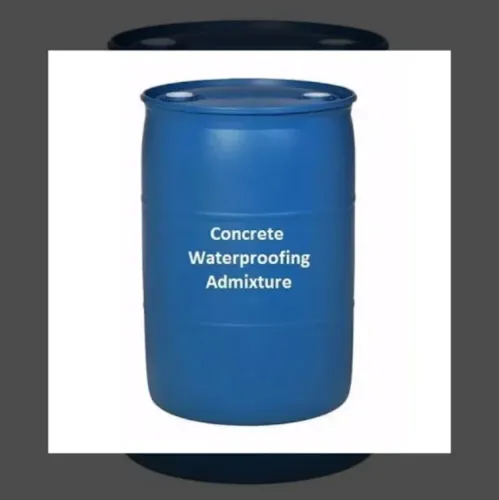
 | Waterproofing Chemical Concrete Waterproofing Admixture Supplier Usage/Application Construction Brand Fosroc Packaging Size 200L Grade Standard Chemical Grade Packaging Type Barrel Shelf Life 2 Year... View product → |
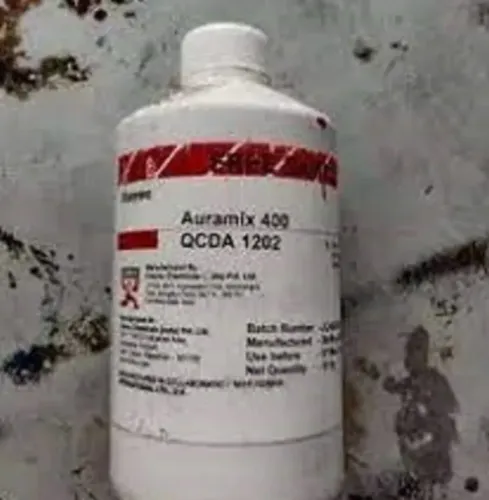
 | Waterproofing Chemical Fosroc Auramix 400 Superplasticizer Admixture, For Construction Suppliier Concrete Strength Grade M25 Brand Fosroc Color Dark Brown Grade Standard Industrial Grade Dosage 0.3% to 1.5% by weight of cement Packaging... View product → |
Frequently asked questions
What information should contractors record before choosing a concrete admixture?
Record slump at discharge, water-cementitious-materials ratio, required strength, cement and supplementary cementitious materials, aggregate grading, temperatures, mixing sequence, pumping distance, haul time, placing method, and setting window.
Why is a project-specific trial mix important?
It shows whether the admixture meets the required slump, strength, setting window, pumpability, and finish under the project’s actual materials and operating conditions.
How can contractors check an admixture supplier’s performance claims?
Ask for compatibility evidence, durability test results, dosage guidance, field-control procedures, and trial-mix data using materials that match the project.
What supplier documents and service terms should contractors compare?
Check technical data sheets, safety data sheets, batch numbers, certificates, storage instructions, delivery reliability, technical site support, replacement terms, and accountability for performance issues.
Related products
 | Concrete Admixture Supplier Concrete Strength Grade M20 Usage/Application Industrial Color Grey Grade Standard Industrial Grade Packaging Type Bag Packaging Size 5 kg... View product → |
 | Concrete Admixture Fosroc Conplast SP430 G8 Concrete Admixture Supplier Packaging Type Drum Usage/Application Construction Brand Fosroc Packaging Size 250 Litre Shelf Life 12 Months Ph Value 8.5 Form Liquid... View product → |
 | Concrete Admixture Supplier Concrete Strength Grade M30 Usage/Application Construction Packaging Size 250 Color Brown Type Of Admixture Pc Based Admixture Shelf Life 1... View product → |
 | Normet Products Corrosion Inhibitors Concrete Admixture Suppliers Packaging Size 200Kg Form Liquid Packaging Type Drum Usage/Application Industrial Use Grade 25 to 60 Color Brown Compressive Strength (ASTM... View product → |