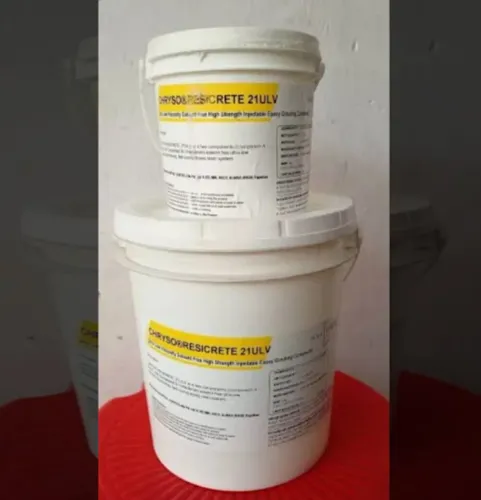
A supplier listing that calls Conbextra GP2 an epoxy grout creates a basic identification risk before you compare price, flow, or delivery. By checking the product type, installation limits, quantity calculation, documentation, and site support, you can decide whether the material fits the load-transfer detail and whether the supplier can support a controlled placement.
Key takeaways
- Confirm Conbextra GP2 is cementitious non-shrink grout, not epoxy or tile grout.
- Match gap size, substrate, mixing method, and placement conditions before ordering.
- Calculate grout volume and plan continuous placement to avoid cold joints.
- Ask suppliers for the current datasheet, batch details, and technical support.
Start by verifying what Conbextra GP2 actually is and where precision grouting applies
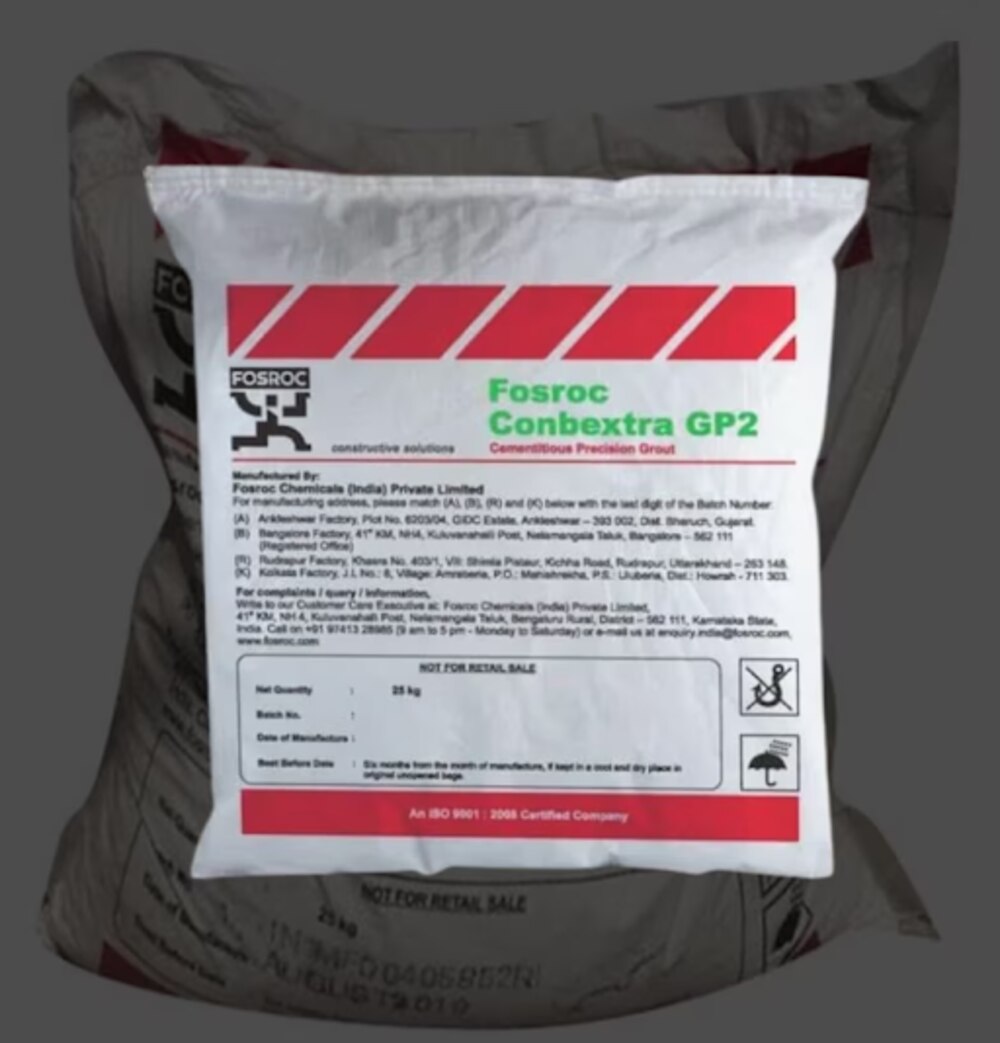
Fosroc Conbextra GP2 is a cementitious non-shrink grout for precision grouting, not an epoxy system and not tile grout. Confirm the identity against the current local technical datasheet, rather than a distributor’s category or abbreviated listing.
The datasheet should identify a factory-controlled dry powder, its intended uses, mixing-water requirement, and normal placement range of approximately 10–100 mm.
Verify the quotation against these points:
- Product identity: It names Fosroc Conbextra GP2 and describes a cementitious non-shrink grout. A listing under “epoxy grout” signals an identification problem.
- Intended application: It covers machinery bases and bearing plates, stanchions, anchor pockets, precast connections, or load-transfer voids. These are precision-grouting locations, not tile joints.
- Declared performance: The current datasheet should state published strengths of about 25 MPa at one day, 50 MPa at seven days, and 60 MPa at 28 days, with the applicable test method.
- Placement depth: A gap beyond about 100 mm requires the manufacturer’s approved aggregate-extension procedure. Do not treat extra water as a substitute.
Request the batch or lot number, manufacture date, expiry or best-before date, safety data sheet, and certificate of analysis or conformity when specified. Reject torn, damp, caked, or resealed bags; moisture contamination can reduce flow and produce inconsistent strength. If the project specification requires chemical-resistant epoxy grout, Conbextra GP2 is the wrong product.
Match the grout to the substrate, gap, mixing method, and placement conditions
Before ordering, have the supplier match the specified Conbextra GP2 grade to the actual substrate, 10–100 mm gap, mixing method, and placement conditions. A product name alone does not confirm suitability.
1. Confirm concrete strength and soundness. Remove laitance, weak concrete, oil, curing compounds, dust, standing water, and loose particles; record the required surface cleanliness and moisture condition from the current datasheet.
2. Confirm the gap geometry. Provide the narrowest and widest dimensions, grout depth, obstruction details, and whether the pour is beneath a baseplate, around an anchor, or into a pocket. A 10–100 mm gap must remain accessible for proper flow and compaction.
3. Confirm temperatures at the substrate, grout, and surrounding air. Ask for the datasheet’s permitted range, working time, curing controls, and protection requirements for hot, cold, windy, or damp placement.
4. Confirm the equipment and mixing sequence. For the factory-controlled powder, require full-bag batching, clean water, calibrated water measurement, the stated water dosage, suitable mixer capacity, and the specified mixing time. Partial bags and guesswork produce variable flow.
5. Confirm access, leak-tight formwork, discharge direction, continuous placement, and the supplier’s stated yield. Use that yield—not bag count alone—to allow for voids, uneven concrete, and placement losses.
6. For a large pour, require matching product variant, compatible batches, and enough stock for uninterrupted placement. Run a trial batch when the gap, temperature, or flow requirement is unusual.
Compare performance requirements with cement grout, epoxy grout, and tile grout
Approve Conbextra GP2 only after matching the design demand to declared performance. Compare compressive strength, bond strength and shrinkage, flow retention, chemical resistance, and suitability for dynamic loads.
Published Conbextra GP2 values are approximately 25 MPa at 1 day, 50 MPa at 7 days, and 60 MPa at 28 days; confirm the current local datasheet and test method.
| Option | Performance profile | Suitable application | Do not substitute when |
|---|---|---|---|
| Conbextra GP2 | Cementitious, non-shrink grout with controlled strength; verify declared bond and dimensional-stability values | Machinery bases, bearing plates, anchor pockets, and load-transfer zones | The specification requires chemical-resistant epoxy grout |
| Cement grout | Lower control over water, shrinkage, bleeding, and final strength unless specially formulated | Non-critical void filling and ordinary bedding | Precision tolerances, sustained dynamic loads, or strict non-shrink performance govern |
| Structural epoxy grout | High bond strength, chemical resistance, and strong performance under demanding loads; requires resin, hardener, aggregate, and strict mixing control | Chemical exposure, heavily loaded equipment, and applications specified for epoxy | A cementitious system is mandated or moisture and installation controls are unsuitable |
| Epoxy tile grout | Tile-joint product; prioritises stain and chemical resistance rather than bearing-area load transfer | Tile joints and wet-area finishes | Baseplates, anchor pockets, or structural precision grouting |
A proper epoxy tile grout comparison prevents a tile product from being mistaken for structural epoxy grout. Ask the supplier to show the specified water range, declared shrinkage result, bond data, and dynamic-load suitability rather than relying on a strength figure alone.
Calculate quantity, plan the pour, and prevent avoidable site failures
Begin with the grout volume, not the number of bags. Divide the required volume in litres by the supplier’s stated yield: 13 litres per 25 kg bag is the planning figure, so 1,000 litres requires about 77 bags before allowance. This volume-to-mass conversion gives approximately 1,923 kg for that volume.
Add a wastage allowance for voids, uneven substrates, formwork leakage, and placement losses, then round up to full bags.
Plan the pour around these controls:
- Order one compatible product variant and confirm sufficient quantity from a compatible batch strategy; a continuous pour should not depend on mixed formulations or regional variants.
- Keep unopened bags on pallets in a dry, covered store. Check the printed date and remaining shelf life; reject illegible or unsuitable stock. Protect bags during storage and transport from rain, punctures, and contamination.
- Use full-bag mixing with calibrated water measurement. Partial-bag batching encourages powder segregation and inconsistent water-to-powder ratios.
- Assign enough labour for mixing, moving, placing, levelling, and monitoring. Prepare clean water, a suitable mixer, and leak-tight formwork before mixing starts.
- Follow the datasheet for placement, temperature limits, finishing, curing, and loading. Protect fresh grout from premature drying and vibration until it reaches the specified strength.
Never increase water to improve flow. Excess water can cause bleeding, segregation, reduced strength, and dimensional instability. Run a trial batch when the gap geometry, flow requirement, or ambient temperature is unusual.
Use a supplier checklist that proves technical suitability, not just availability
A price and delivery date do not prove suitability. Before ordering, require documents and confirmations that let you identify the material, calculate its output, and trace every bag used in the pour.
1. Obtain the current technical data sheet and safety data sheet for the exact regional product. Check that it identifies Conbextra GP2 as a cementitious, non-shrink precision grout—not an epoxy grout—and states the permitted water dosage, flow consistency, yield, temperature limits, strength values, and application limits.
2. Request batch traceability: batch or lot number, manufacture date, expiry or best-before date, and the supplier’s storage records. Reject bags with missing identification, damaged seals, or dates that leave insufficient usable shelf life.
3. Ask for a certificate of conformity and, where the project specification requires it, a certificate of analysis linked to the supplied batch. The certificate must name the product variant and governing standard, not merely show the manufacturer’s name.
4. Confirm quantity using the supplier’s stated yield rather than bag count. A 25 kg bag typically yields about 13 litres, but water dosage changes the result; include allowance for voids, uneven concrete, and placement losses.
5. For a large continuous pour, obtain written confirmation of sufficient stock from one compatible product variant and a controlled batch strategy. Ask a Gujarat project support contact, such as Dolfin Projects, to confirm regional packaging, datasheet validity, delivery sequencing, and site technical assistance before release.
If the supplier cannot provide these records, treat availability as unproven and place the order on hold.
Related product
 | Epoxy Grout Fosroc Conbextra GP2 Epoxy Grout Supplier Packaging Size 25 kg Brand Fosroc Usage/Application Construction Form Powder Country of Origin Made in India Packaging Type HDPE Bag Tensile... View product → |
Frequently asked questions
What is Fosroc Conbextra GP2 used for?
Conbextra GP2 is a cementitious non-shrink grout used for precision grouting beneath baseplates, machinery, structural supports, and similar applications. Verify the current local technical datasheet for its approved uses and limits.
How should you choose between cement grout, epoxy grout, and tile grout?
Compare the required strength, shrinkage control, chemical exposure, gap dimensions, working time, placement method, and substrate. Tile grout serves joint finishing and is not a substitute for a precision grout beneath equipment or structural bearings.
How do you calculate the amount of Conbextra GP2 required?
Calculate the planned grout volume from the gap dimensions, add the product yield stated in the current technical datasheet, and include a site allowance for waste, leakage, and uneven formwork.
What should you ask a Conbextra GP2 supplier before ordering?
Ask for the current technical datasheet, safety data sheet, pack size, batch number, manufacture or expiry information, storage requirements, yield, mixing instructions, delivery conditions, and application support for your site.