A supplier who quotes a Fosroc product by category alone has not yet shown that it suits your substrate, exposure, construction stage, or performance target. By the end, you will have a practical process for preparing the project brief, testing technical compatibility, comparing complete systems, and checking whether the supplier can support delivery and application.
Key takeaways
- Define substrate, exposure, performance target, quantity, and delivery date before requesting quotations.
- Choose suppliers that specify compatible systems, not isolated Fosroc products.
- Run site or laboratory trials for admixture, repair, and waterproofing compatibility.
- Compare full application build-ups, interface details, technical support, and batch traceability.
Define the project conditions before asking for a Fosroc quotation
Before comparing suppliers, define the construction stage, performance target, quantity, delivery date, substrate condition, and exposure conditions. This prevents a generic “waterproofing” or “high-range admixture” quotation from being mistaken for a project-specific construction chemicals solution.
1. Send structural drawings, waterproofing details, concrete mix design, repair specification, method statement, site photographs, and details of cracks, joints, leaks, or damaged concrete. State whether waterproofing is positive-side or negative-side, and whether the work concerns a basement, roof, wet area, water tank, construction joint, or repair zone.
2. Record exposure mechanisms: chlorides, sulfates, carbonation, industrial chemicals, hydrostatic pressure, abrasion, thermal shock, or cleaning chemicals. Ask for the named test method, conditioning, specimen age, and acceptance limit—for example, rapid chloride permeability, sulfate expansion, water penetration, chemical resistance, or crack bridging—not an unsupported durability claim.
3. For concrete admixtures, provide cement type, supplementary cementitious materials, target slump, retention period, dosage range, ambient temperature, and the required standard, such as EN 934-2 or ASTM C494. Require project-specific trial batching.
4. For tile and grout work, state tile absorption, size and weight, joint width, movement, wet or submerged exposure, and the primer or waterproofing layer. For repairs, identify structural versus cosmetic work and specify bond strength, compressive strength, modulus, shrinkage, chloride content, and compatibility with existing concrete.
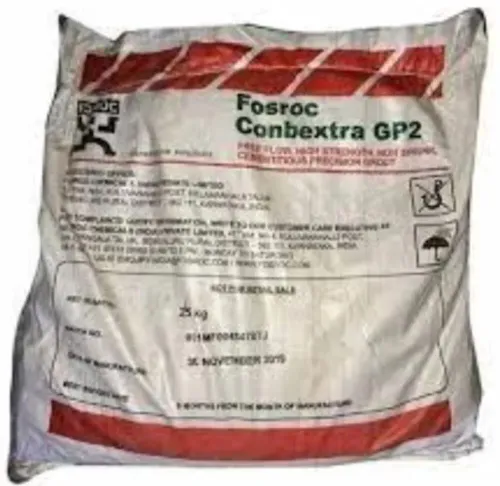
5. Request the exact Fosroc product grade, pack size, manufacturing location, current technical data sheet, coverage, application thickness, pot life, curing requirements, quantity, and delivery date. Use these facts for Fosroc supplier selection, not a product-family label.
Check whether the supplier is recommending a system, not just a product
A correct recommendation names the exact Fosroc product grade and complete application system, not merely “waterproofing” or “repair mortar.” Ask for a written build-up showing each layer, its substrate, the exposure it handles, and the reason that grade fits the project.
The submission should use the market-specific technical data sheet and identify its revision, pack size, manufacturing location, coverage, thickness, pot life, water addition, and curing requirements.
Request these checks before accepting the quotation:
- Confirm whether the design is for positive-side or negative-side waterproofing, and identify the water pressure, substrate condition, and direction of moisture.
- Show details for construction joints, movement joints, kicker joints, penetrations, pipe sleeves, terminations, changes of plane, drainage outlets, and honeycombing repairs.
- Match the tile assembly to tile absorption, size and weight, joint width, substrate movement, wet or submerged exposure, chemical exposure, primer, membrane, adhesive classification, and grout resistance.
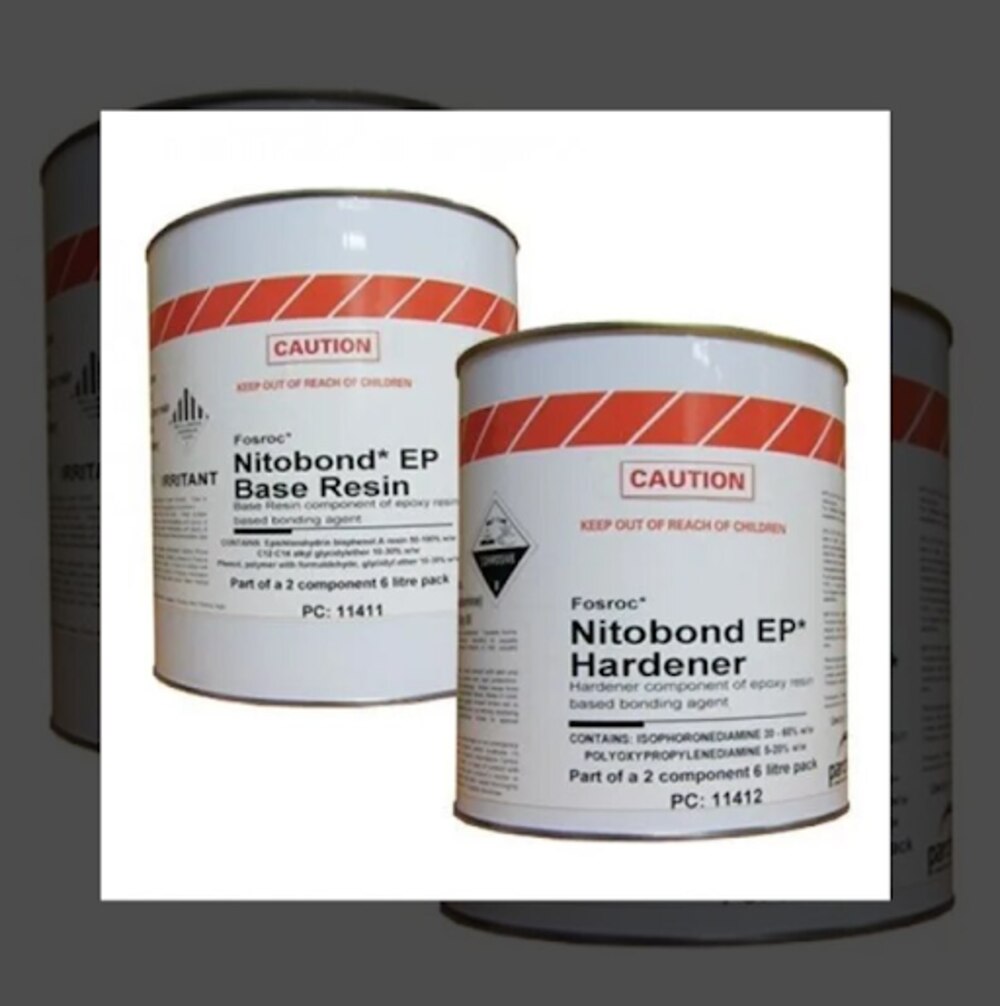
- Provide written compatibility confirmation wherever products meet, including waterproofing and tile adhesive, primer and resin topping, or sealant and membrane.
- State the inspection points for substrate preparation, mixing, thickness control, reinforcement or mesh, curing, and defect repairs.
A supplier quoting one product without these interfaces has not demonstrated a system selection. Require a mock-up or manufacturer-backed method statement where performance depends on controlled water addition, wet-film thickness, dry-film thickness, or layer adhesion.
A basement membrane is not automatically suitable beneath tile, and a general-purpose adhesive is not a substitute for a deformable or rapid-setting grade.
Verify admixture, repair, and waterproofing compatibility through trials
Approve full-scale work only after the supplier produces project-specific trial evidence, not a catalogue claim that the products are “compatible.” Test the exact Fosroc grade, dosage, substrate, adjacent materials, application sequence, and site conditions stated in the method statement.
1. For concrete admixture compatibility, request a trial mix using the specified cement, supplementary cementitious materials, aggregates, water, and concrete temperature. Record dosage range, slump at discharge and after the required retention period, setting time, air content, compressive strength, and durability results.
Confirm compliance with the specified class under EN 934-2 or ASTM C494; do not accept a published water-reduction percentage as the acceptance criterion.
2. For repair mortar, require evidence for the intended repair class. Structural repairs need the relevant EN 1504 performance class or equivalent specification, with bond strength, compressive strength, elastic modulus, shrinkage or restrained expansion, chloride content, and compatibility with the existing concrete. High compressive strength alone can make an old, lower-modulus substrate crack or debond.
3. For waterproofing, demand a mock-up or manufacturer test data covering construction joints, movement joints, penetrations, pipe sleeves, kicker joints, terminations, changes of plane, drainage outlets, and honeycombing repairs. Test the complete build-up, including the waterproofing layer and tile adhesive where both are used.
4. Obtain written compatibility confirmation for every interface, such as admixture and curing compound or primer and resin topping. The submittal must identify the exact grade, pack size, manufacturing location, revision-controlled technical data sheet, method statement, trial results, and acceptance limits before procurement.
Compare complete build-ups and interface details for each application
Choose the system whose complete build-up matches the exposure, substrate movement, construction stage, and adjacent materials—not the product with the lowest unit price.
| Option | Compare the complete build-up | Choose it when |
|---|---|---|
| Cementitious waterproofing coating | Primer or substrate preparation, two-coat thickness, curing, detailing at joints and penetrations, and protection layer | Rigid concrete needs positive- or negative-side waterproofing; confirm crack and water-pressure limits |
| Crystalline waterproofing | Concrete quality, surface preparation, coating coverage, curing, crack treatment, and construction-joint detailing | Capillary water ingress is the problem; do not treat it as a substitute for movement-joint sealing |
| Elastomeric coating | Primer, reinforcement, film thickness, termination, drainage details, and UV or ponding resistance | The substrate moves or cracks within the product’s stated limits |
| Admixture | Exact grade and dosage, concrete mix, sequence of addition, and trial results for slump, setting, air, strength, and durability | The concrete mix needs controlled water reduction; published percentage alone proves nothing |
| Repair mortar | Corrosion treatment, bond coat, repair depth, curing, and compatibility with the existing concrete | Spalled or honeycombed concrete requires section reinstatement; match shrinkage and strength |
| Joint system | Waterbar or sealant, backer rod, movement allowance, injection provision, and terminations | Construction joints, movement joints, sleeves, kickers, and penetrations govern leakage risk |
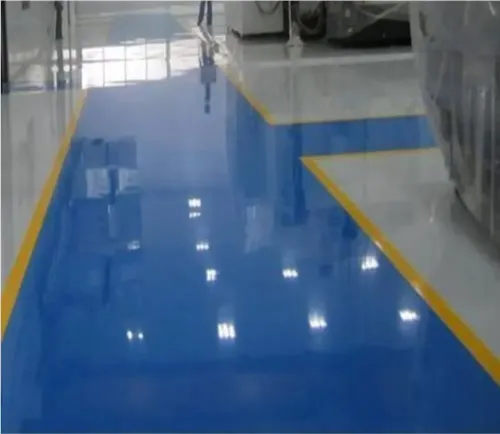
| Flooring system | Primer, body coat, broadcast aggregate, topcoat, coving, joints, and repair materials | Abrasion, chemicals, impact, thermal shock, slip, cleanability, and substrate bond matter |
| Tile-installation materials | Adhesive, primer or waterproofing layer, grout, movement joints, and edge sealant | Match tile absorption, size and weight, movement, wet exposure, joint width, chemicals, open time, slip, deformability, and grout resistance |
Require written compatibility evidence for every interface. Accept manufacturer system documentation, a project mock-up, or test data—not shared distribution. Check the exact grade, revision-controlled technical data sheet, pack size, manufacturing location, coverage, thickness, pot life, and curing limits. A general-purpose cementitious adhesive is not an interchangeable substitute for a deformable or rapid-setting grade.
Use technical support, traceability, and logistics as supplier-selection criteria
A low price is false economy if the supplier cannot support the first application or replace a failed batch quickly. Select the supplier that accepts responsibility for the installation window, not only the dispatch.
Require these checks before issuing the purchase order:
- Site technical support, including a mock-up inspection and hold-point visits. The representative must review substrate preparation, water addition, mixing time, application thickness, mesh or reinforcement detailing, curing, and defect repairs.
- A written record of the approved mock-up, including product grade, dosage, equipment, ambient conditions, and acceptance limits. For admixtures, match the trial batch to the specified cement, supplementary cementitious materials, temperature, dosage, slump-retention period, and EN 934-2 or ASTM C494 requirement.
- Batch traceability from delivery to manufacture, with batch numbers recorded against each work area. Ask how the supplier will segregate batches when colour, set time, workability, or appearance must remain consistent.
- Shelf life and storage limits on the quotation or order confirmation. Confirm remaining shelf life covers the installation window; protect powders from moisture and liquids or resins from freezing and excessive heat.
- Logistics covering split shipments, site access, damaged-pack replacement, and escalation contacts.
Assess Dolfin Projects on these records rather than on a quoted unit rate alone.
Related products
 | Waterproofing Chemical Supplier Form of Chemical Granules Usage/Application Construction Packaging Size 50 Kg Category Waterproofing Coating Color Grey Country of Origin... View product → |
 | Fosroc Waterproofing Chemical Fosroc Brushbond RFX Waterproofing Chemical Supplier Brand Fosroc Usage/Application Construction Packaging Size 4.85 Litre Category Crystalline Waterproofing Color White Shelf Life 12 Months... View product → |
Frequently asked questions
What project information should you provide before requesting a Fosroc quotation?
Provide the construction stage, substrate condition, exposure conditions, performance target, estimated quantity, and required delivery date.
How can you tell whether a Fosroc supplier is recommending a complete system?
Ask for the full product sequence, surface preparation, mixing and application instructions, curing requirements, thicknesses, and interface details between materials.
Why are trials important when selecting admixtures, repair materials, or waterproofing products?
Trials confirm compatibility with your cement, aggregates, substrate, existing coatings, site conditions, and application method before full-scale work begins.
What supplier capabilities matter beyond product price?
Assess technical guidance, batch and delivery traceability, stock availability, response time, documentation, and the ability to support site application.
Related products
 | Waterproofing Chemical Concrete Waterproofing Admixture Supplier Usage/Application Construction Brand Fosroc Packaging Size 200L Grade Standard Chemical Grade Packaging Type Barrel Shelf Life 2 Year... View product → |
 | Waterproofing Chemical Supplier Grade Standard Industrial Grade Brand Fosroc Usage/Application Waterproofing Packaging Size 20kg Category Waterproofing Coating Purity % 98%... View product → |
 | Fosroc Waterproofing Chemical Fosroc Renderoc Plug Waterproofing Chemical Supplire Brand Fosroc Usage/Application Construction Packaging Size 15 kg Category Waterproofing Coating Temperature 10 Degree Celsius Packaging Type... View product → |
 | Concrete Admixture Fosroc Conplast SP430 G8 Concrete Admixture Supplier Packaging Type Drum Usage/Application Construction Brand Fosroc Packaging Size 250 Litre Shelf Life 12 Months Ph Value 8.5 Form Liquid... View product → |